
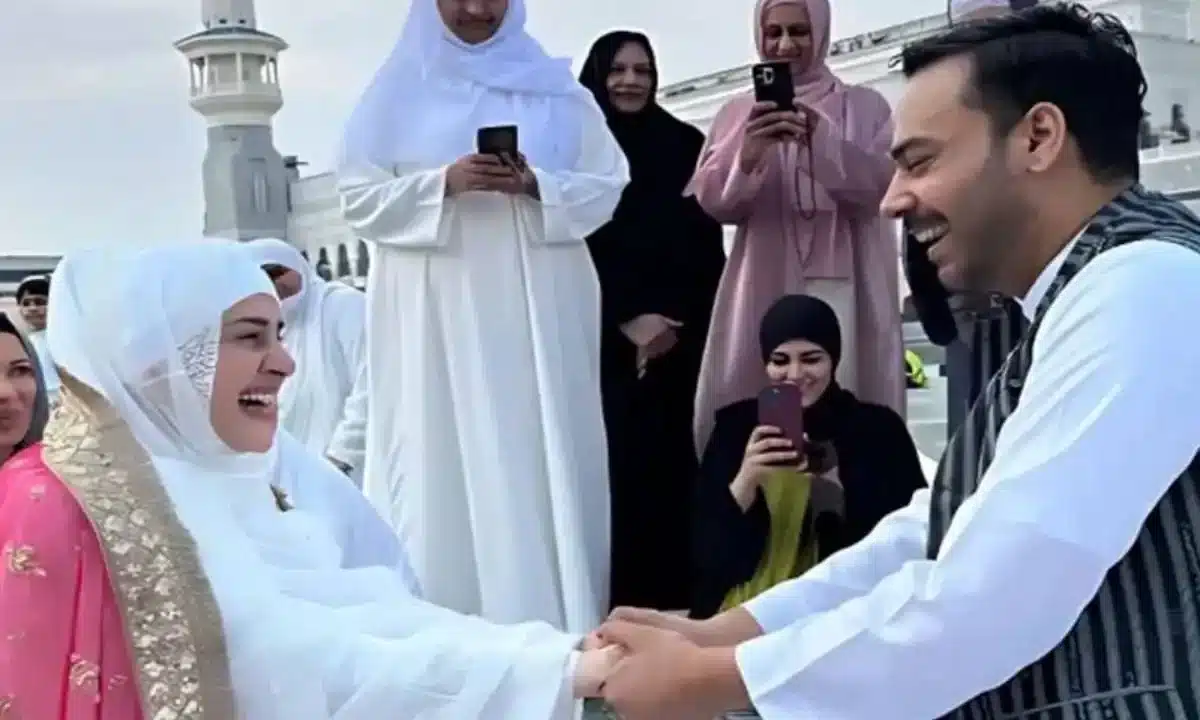
At Yaseen Overseas, we specialize in simplifying overseas legalities. Marrying in the Holy Cities of Makkah and Madinah is a sacred desire for many expat residents. As an Indian resident (Iqama holder) marrying a foreign woman (also a resident), the procedure follows strict Sharia guidelines and Ministry of Justice regulations.
1. Eligibility Requirements
Before starting, ensure both parties meet these non-negotiable criteria:
-
Valid Iqama: Both the groom and the bride must hold valid residency permits.
-
Legal Age: Minimum of 18 years for both.
-
Religion: As the marriage is in Makkah or Madinah, both parties must be Muslim.
-
Guardian (Wali): The bride’s father or a male legal guardian must be present (or provide a notarized Power of Attorney).
2. Essential Documentation Checklist
Collect these documents to avoid delays:
-
Passport & Iqama: Originals and copies for the couple and two witnesses.
-
NOC (No Objection Certificate): Obtained from the Indian Consulate in Jeddah. This confirms you are single or have no legal barrier to marriage.
-
Premarital Health Certificate: Issued by a Ministry of Health (MOH) accredited hospital in Saudi Arabia (results valid for 6 months).
-
Previous Status Proof: If either party is divorced or widowed, original attested decrees are required.
-
Consent Letter: Written and verbal consent from the bride.
3. The Procedure in Makkah and Madinah
Step A: The Electronic Application (Najiz)
Saudi Arabia has digitized marriage through the Najiz platform (najiz.sa).
-
Log in with your Nafath (Absher) credentials.
-
Choose “Social Status” services and select “Marriage Contract Registration.”
-
Enter the details for the groom, bride, guardian, and two witnesses.
-
Upload the medical report and the NOC from the Indian Consulate.
Step B: Choosing the Marriage Official (Ma’zoon)
Once the request is submitted, you will select an authorized Ma’zoon Shari (Marriage Registrar) through the Ministry of Justice directory.
-
Location Flexibility: The Ma’zoon can conduct the ceremony at your residence in Makkah or Madinah, or at an approved office.
-
Ceremony Fee: Typically SR 1,000 to SR 2,000. (subject to change not fixed)
Step C: The Ceremony (Nikah)
-
The Ma’zoon verifies the identities of everyone present.
-
The Mahr (Dowry) must be agreed upon and mentioned in the contract.
-
Digital signatures/biometrics are taken via the Najiz platform to finalize the contract.
4. Post-Marriage Legalizations
To make your marriage valid globally and in India, follow these attestation steps:
-
MOFA: Attest the document at the Ministry of Foreign Affairs in Saudi Arabia.
-
Indian Consulate, Jeddah: Final attestation to update your records in India.
Why Choose Yaseen Overseas?
Navigating government portals and consulate requirements can be overwhelming. Yaseen Overseas provides:
-
Assistance with Consulate NOC applications.
-
Guided hospital visits for Premarital Screening.
-
Coordination with authorized Ma’zoons in Makkah and Madinah.
-
End-to-end Attestation Services.
If the bride is on a Visit Visa (Tourist, Personal, or Family Visit), the process is possible but significantly more complex than if she were an Iqama holder. Saudi law traditionally required both parties to have residency, but recent reforms have opened a path for visitors, provided specific legal conditions are met.
Here are the critical details for your Yaseen Overseas page regarding brides on a Visit Visa.
1. Vital Legal Context
-
The “Resident + Visitor” Rule: Currently, the Ministry of Justice allows a marriage where the groom is a resident (Iqama holder) and the bride is a visitor, but it typically requires an application via the “Non-Saudi Marriage Documentation” service on the Najiz portal.
-
Court Approval: Unlike two residents who can use a freelance Ma’zoon, a visitor bride often needs her case reviewed by the Personal Status Court to ensure no visa violations are occurring.
2. Procedure for a Bride on Visit Visa
| Step | Action | Important Note |
| 1. Indian Consulate NOC | The bride must get a “Singleness Certificate” from the Consulate. | If she is on a Visit Visa, she may need her original Indian affidavit to be extremely detailed. |
| 2. Medical Test | The premarital medical test is mandatory. | Visitors can take this at authorized private hospitals. The results must be uploaded to the Sehaty/MOH system. |
| 3. Guardian (Wali) Presence | The bride’s father (Wali) must be present or have a legally attested Power of Attorney (POA). | If her Wali is in India, the POA must be attested by the Saudi Embassy in India and the MOFA in KSA. |
| 4. Najiz Application | Apply via the Najiz.sa portal under “Marriage Documentation of One Spouse to a Non-Saudi.” | You will need to upload her Visa Number and Border Number (the hand-written number on the passport at entry). |
| 5. Court Appointment | The court will review the documents and schedule a session (virtual or physical). | A Judge will oversee the contract instead of a standard neighborhood Ma’zoon. |
3. Strategic Advice for Yaseen Overseas Clients
-
Visa Duration: The process can take 2 to 4 weeks. Ensure the bride has at least 30 days remaining on her visit visa. Overstaying is a criminal offense and will stop the marriage process immediately.
-
The “Georgia” Alternative: If the court denies the request due to specific visa restrictions, many expats fly to Georgia or the Seychelles for a quick civil marriage, then return and register the marriage in KSA.
-
Attestation is King: Because she is a visitor, her documents from India (Singleness Affidavit) must be perfectly attested by the MEA (India) and the Saudi Embassy before she arrives in KSA.